




This post is for anyone looking to paint a pet portrait in the future… bookmark this page for when holidays roll around and you want to make something super special for a loved one 🙂
This is also for paid subscribers who would like to follow along on the monthly Live Paint. This already happened but you can watch the replay HERE.
Below are the steps I’m taking to prepare for the session. Where we will be painting the adorable pup, Samwise Potato. Sammy is also one of the hardest pups to paint because he is very fluffy and has white fur… and as we know, we don’t use white paint in watercolor ~ only the white of the page. Soooo this is going to be an interesting one to demo live.
If you are a paying subscriber you will be notified by email once the live starts. As always, the recording will be posted to Substack at the end of the day.
Watercolor Pet Portrait Live Paint
Substack App
Thursday 10am – 11am central
If you would like to join, upgrade your subscription before Thursday. Or join for next month when we will be painting clouds 🙂
The Pet Portrait Photo
First off! We need a photo to reference.
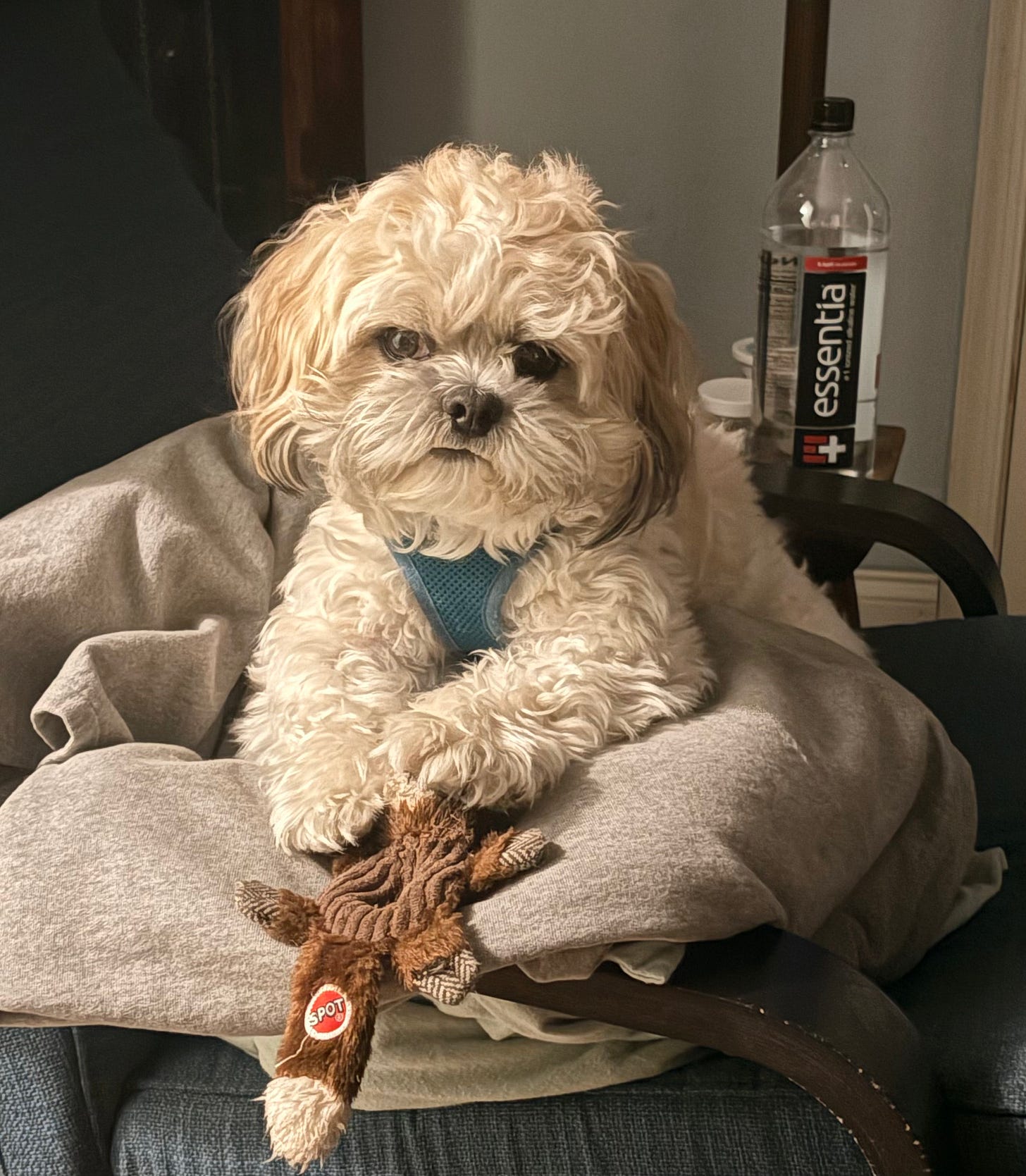
I am going to be painting from the photo below submitted by a new member, Julie. Hi Julie! Thanks for submitting this precious photo of Samwise Potato to our chat 🙂
Let’s dive a little deeper on what makes this such a great pet portrait reference photo. Keep these tips in mind when taking pet photos specifically to watercolor.

- Great light: This pic of Sammy has a direct light source. The left side of the photo is in light, throwing shadow on the right side… So as I’m painting, I can keep going back to this truth when I’m unsure of how I should paint something.
- Eye level: Most of the reference photos I get are from the top down, aka. the owners view of their pet. And although these make good pet portraits, the most successful ones I’ve done are when we are on the animals level. If your dog or cat is sitting, squat down and get a head on shot of them.
- The Composition is Clear: There’s a clear cut of foreground and background. I can paint the dog and the pillow he’s sitting on from the photo, and then I can improvise / simplify the rest of the photo. I don’t need to paint the chair, the water bottle, any of the furniture behind him. I see his paws and where they end. His booty isn’t as clear but if I keep the pillow it will make sense that he’s laying down on something soft.
Editing the Reference Photo
Next up, turn that contrast up!
We will be tracing Samwise Potato on a lightbox. Sometimes it’s hard to see subtle shapes when using a lightbox (or window) to trace. I recommend changing the photo to black and white and then turning the contrast way up. An easy thing to do straight from your phone. Save as a new photo when prompted.
This photo already as great contrast so not much was needed.

Option here to print straight from your phone, or airdrop the photo to your computer. Open up your go to document application. That can be Word or PowerPoint or Photoshop or even Google Docs. Drop the photo on a printer size document (8.5×11”). If you have the editing capabilities to position the dog’s eyes right at the top third of your paper. I’d also make the dog as BIG as possible… they are the most important thing after all 🙂
Download and print the below photo already sized to 8.5×11” and removed the background clutter.
I also like to print the original, so I can reference colors and not have to look back on my phone.

Sketch the Reference Photo Onto Your Watercolor Paper
This is where I use a lightbox (like this one) but you can also turn the lights off and tape your printed photo up to a window. Then tape your watercolor paper ontop of it to trace.
Side note: People have mixed feelings about tracing but I want you to know (if you don’t already) even those watercolor artists in galleries and in the watercolor society trace their photos. It’s all up to the artist, because as an artist you get to choose your process… so if you’d like to freehand this portrait, go for it!
TIPS WHEN TRACING:
- Tape your photo and watercolor paper down.
- If you are using a watercolor block, open the bottom and possibly the left side to make room for the lightbox and it’s cord… or just take the sheet off completely.
- Yes you need to outline the dog, but MOST IMPORTANTLY you need to outline the shadow shapes!
- Use a sharp pencil ~ my favorite is H if you have a pencil set, because it’s the hardest and lightest.
- BE PRECISE! Especially around the eyes. SIMPLIFY! everything else lol… no need to draw every piece of fur. you just want to understand the general direction its moving in. I also took away all the background and Sammy’s harness.
- if its not there – dont draw it
- What information will I really miss when painting… I am constantly lifting my watercolor paper to look and the printed sheet and see if i’m on the right track. When I lift my sheet, I’m also seeing what I forgot to trace on my watercolor paper. Double check before you step away, I’ve forgotten the top of heads, feet, noses (!) and its harder to go back and line your page up exactly.
Time To Watercolor
Here is the recording from the Substack Live. Let’s paint along side one another!
If you are interested in catching the next one, see membership options HERE.